
IPL Photofacial For Skin Revival In Bozeman, MT
Brighten, calm, and rejuvenate skin with a barrier-conscious approach
At Instinct Holistic Medical Spa in Bozeman, IPL photofacial treatments are designed to improve skin tone, reduce redness, and restore a clearer, brighter complexion while prioritizing skin barrier health and long-term skin safety.
IPL is one of our favorite treatments for patients who want meaningful improvement without aggressive downtime. It can address sun damage, redness, pigmentation, visible vessels, and dull skin while also supporting cellular rejuvenation and healthier collagen activity over time.
At Instinct, we believe skin rejuvenation should feel intelligent, not aggressive. That means choosing the right energy, the right technique, and the right pace for your skin.
What Can IPL Photofacial Improve?
IPL can address multiple skin concerns at once, making it a powerful treatment for clearer, calmer, more radiant skin.
- Sun damage
- Hyperpigmentation and brown spots
- Rosacea and facial redness
- Freckles
- Age spots and sun spots
- Broken capillaries and spider veins
- Uneven skin tone
- Dull or rough texture
- Enlarged pores
- Early visible signs of skin aging
Skin Rejuvenation Beyond Correction
While IPL is often known for improving pigmentation and redness, it also supports broader skin rejuvenation. Light energy encourages healthier cellular activity and collagen support, helping skin appear brighter, smoother, and more refreshed over time.
What Makes Our IPL Approach Different?
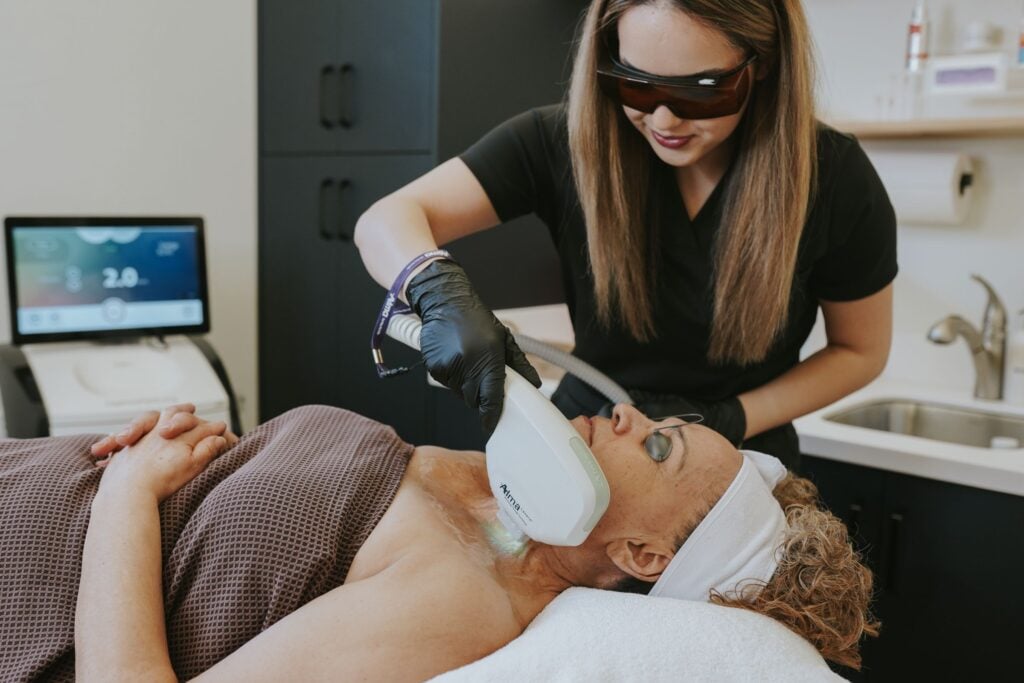
At Instinct, our treatments are guided by a barrier-first philosophy. We use Alma DyeVL technology on the Harmony XL Pro platform, an advanced narrowband IPL system designed to treat pigmentation and vascular concerns with precision.
For many patients we begin with an in-motion treatment technique, allowing energy to build gradually in the skin to improve comfort and prioritize safety.
As treatments progress, your provider may also use targeted stamping techniques to deliver more focused energy to areas of pigmentation or vascular concern.
IPL photofacial for Bozeman and Montana skin
Bozeman sits at over 4,700 feet of elevation, and the UV intensity at that altitude is measurably higher than at sea level, even on cloudy days and well into the fall and winter months. For clients who ski, hike, bike, and spend extended time outdoors, that UV exposure accumulates in predictable patterns: diffuse pigmentation across the cheeks and nose, sunspots on the forehead and hands, and redness and broken capillaries from repeated vascular stress and cold wind exposure.
These are the concerns we see most frequently at Instinct, and the Alma DyeVL is exceptionally well-suited to address all of them. Our providers understand how Montana's climate and lifestyle interact with the skin because they live here too, and every treatment plan we build accounts for where you are in your outdoor season, how recently you have had significant UV exposure, and how your skin barrier is holding up before we apply any energy.
Timing your IPL series around Bozeman's seasons is something we discuss at every consultation. Fall and late winter are typically the best windows for treatment because UV exposure is lower, tan risk is minimal, and results can build through the indoor months before summer activity resumes.
IPL for a range of skin tones: what makes the DyeVL different
Conventional broadband IPL has historically been most appropriate for lighter Fitzpatrick skin types, generally types I through III, because it targets melanin broadly and carries a higher risk of post-inflammatory hyperpigmentation in skin with more baseline pigment. This is a real and well-documented limitation that has made many providers cautious about offering IPL to clients with olive, medium-brown, or darker complexions.
The Alma DyeVL is a narrowband IPL system, which means it delivers energy within a more targeted spectrum designed specifically for vascular and pigmented lesion treatment. Combined with the In-Motion delivery technique, which builds heat gradually across the skin rather than delivering single high-energy pulses, the DyeVL allows our providers to treat safely and effectively across a broader range of skin tones, including Fitzpatrick types up to IV, with appropriate parameter selection.
This does not mean every client at every skin tone is automatically a candidate for every IPL setting. It means we have a device and a technique that expand what is safely possible, and our providers assess each individual carefully before treatment. If you have been told IPL is not appropriate for your skin tone at another practice, it is worth having a conversation with our team.
IPL vs BBL: what is the difference and does it matter?
BBL, or BroadBand Light, is a trademarked device made by Sciton. IPL, or Intense Pulsed Light, is the broader technology category that BBL belongs to. Both use filtered light energy to target pigmentation and vascular concerns in the skin, and both can produce excellent results in the right candidate with the right provider.
The differences are in the specific device design, filtration system, and delivery method. The Alma DyeVL we use at Instinct is a narrowband IPL system, meaning it operates within a more refined wavelength range specifically optimized for pigmented and vascular lesions, rather than the broader spectrum of a conventional IPL or BBL device. The DyeVL also incorporates Alma's In-Motion technology, which distributes energy more gradually across the skin for improved comfort and a more inclusive treatment range.
For most clients, the meaningful question is not which brand name is on the device, but whether the device is appropriate for your skin type, whether your provider knows how to use it safely, and whether the treatment is being designed around your specific concerns. We are happy to discuss how the DyeVL compares to other devices you may have researched during your consultation.
IPL for rosacea and chronic facial redness
Rosacea is a chronic inflammatory skin condition that causes persistent facial redness, visible blood vessels, and in some cases papules and pustules that resemble acne. It is particularly common in individuals who live at altitude or spend significant time outdoors in cold and wind, making it a frequent concern among Bozeman clients.
IPL targets the hemoglobin in visible blood vessels and dilated capillaries, selectively heating and collapsing them without affecting the surrounding skin. For rosacea-related redness and vascular flushing, a series of DyeVL treatments can produce meaningful and lasting reduction in visible redness, broken capillaries, and the overall appearance that rosacea causes.
IPL is not a cure for rosacea, and it does not address the underlying inflammatory triggers. But as a management tool used alongside an appropriate skincare routine and trigger avoidance, it is one of the most effective non-surgical options available. We discuss rosacea management as a long-term program rather than a one-time fix, and we build maintenance schedules that keep results stable across seasons.
IPL Brightening Beyond the Face
Although the face is the most common treatment area, IPL brightening can also improve sun damage and discoloration in other areas of the body that receive frequent sun exposure.
- Face
- Neck
- Décolleté
- Hands
- Arms
- Shoulders
- Back
Recovery and Aftercare
IPL photofacial treatments involve minimal downtime. Skin may appear slightly pink or warm immediately after treatment and typically settles within several hours.
- Wear daily broad-spectrum SPF
- Avoid direct sun exposure
- Use gentle skincare
- Avoid picking flaking pigment
How Many IPL Treatments Are Needed?
Optimal results typically occur after a series of 3–6 treatments spaced about four weeks apart.
When Should IPL Be Delayed?
- Botox or neuromodulator injections within the past 2 weeks
- Recent sunburn or significant sun exposure
- Active skin infection or irritation
- Medications that increase light sensitivity
Pre-Treatment Guidelines
- Avoid Botox or Dysport for at least 2 weeks prior
- Avoid tanning and heavy sun exposure
- Pause strong exfoliating products if directed
- Avoid waxing or aggressive exfoliation before treatment
Frequently asked questions about IPL photofacial
Schedule Your IPL Consultation in Bozeman
If you are looking to improve sun damage, redness, pigmentation, or overall skin clarity, IPL photofacial treatment may be an excellent option.
Our team will evaluate your skin and create a customized treatment plan designed to support both visible improvement and long-term skin health.
Schedule Consultation